
Asbestos Removal in Western Sydney
Fibro homes, old sheds and brick veneer houses with fibro eaves are everywhere in Western Sydney. If you are demolishing or renovating, the asbestos has to be dealt with first. Removalists licensed by SafeWork NSW do the job, the waste only goes where the law allows, and you have a clearance certificate in hand before the next trade turns up.
- Asbestos handled by SafeWork NSW licensed removalists
- Planned around your builder's start date
- Brick, concrete and steel sorted for recycling
- Block cleared and ready for the slab
Where asbestos turns up in Western Sydney homes
Any home built before 1990 might have asbestos in it. Out west, that covers a lot of houses. The post-war fibro cottages in suburbs like Blacktown, St Marys, Mount Druitt and Green Valley were often built from asbestos cement sheet. Brick veneer homes from the 1960s to the 1980s look safer from the street, but many still have it in the eaves, the bathroom and laundry walls, under the vinyl floor and around the flue.
The usual places we find it:
- Fibro wall sheeting, inside and out
- Eaves linings and gable ends
- Wet area linings behind tiles in bathrooms and laundries
- Backing on old vinyl floor tiles and sheet vinyl
- Corrugated roofing on houses, garages and sheds
- Flues, fences and old pipes
You cannot tell for sure by looking. Get a hazardous materials survey done first. It names what is in the house, where it sits and roughly how much there is.
What NSW law requires
The rules are clear. Once you go past 10 square metres of bonded sheeting, the law says a removalist holding a SafeWork NSW licence has to take it off. Crumbly, friable asbestos that sheds fibres easily is Class A work every single time. A Class B licence only covers the bonded kind.
The regulator has to be told ahead of time before a licensed job begins. Once the sheeting is gone, someone checks the area. For friable jobs that is a licensed asbestos assessor. For bonded sheeting it is an independent, competent person with no stake in the job. Nobody else gets back to work until they sign the clearance certificate.
On our sites, the asbestos is handled by removalists who hold the right class of SafeWork NSW licence for what is in front of them.
How an asbestos removal job runs
- Inspect and identify. We look at the site, check any existing report and organise a hazardous materials survey where one is needed.
- Notify. The regulator gets its notice before the licensed crew turns up.
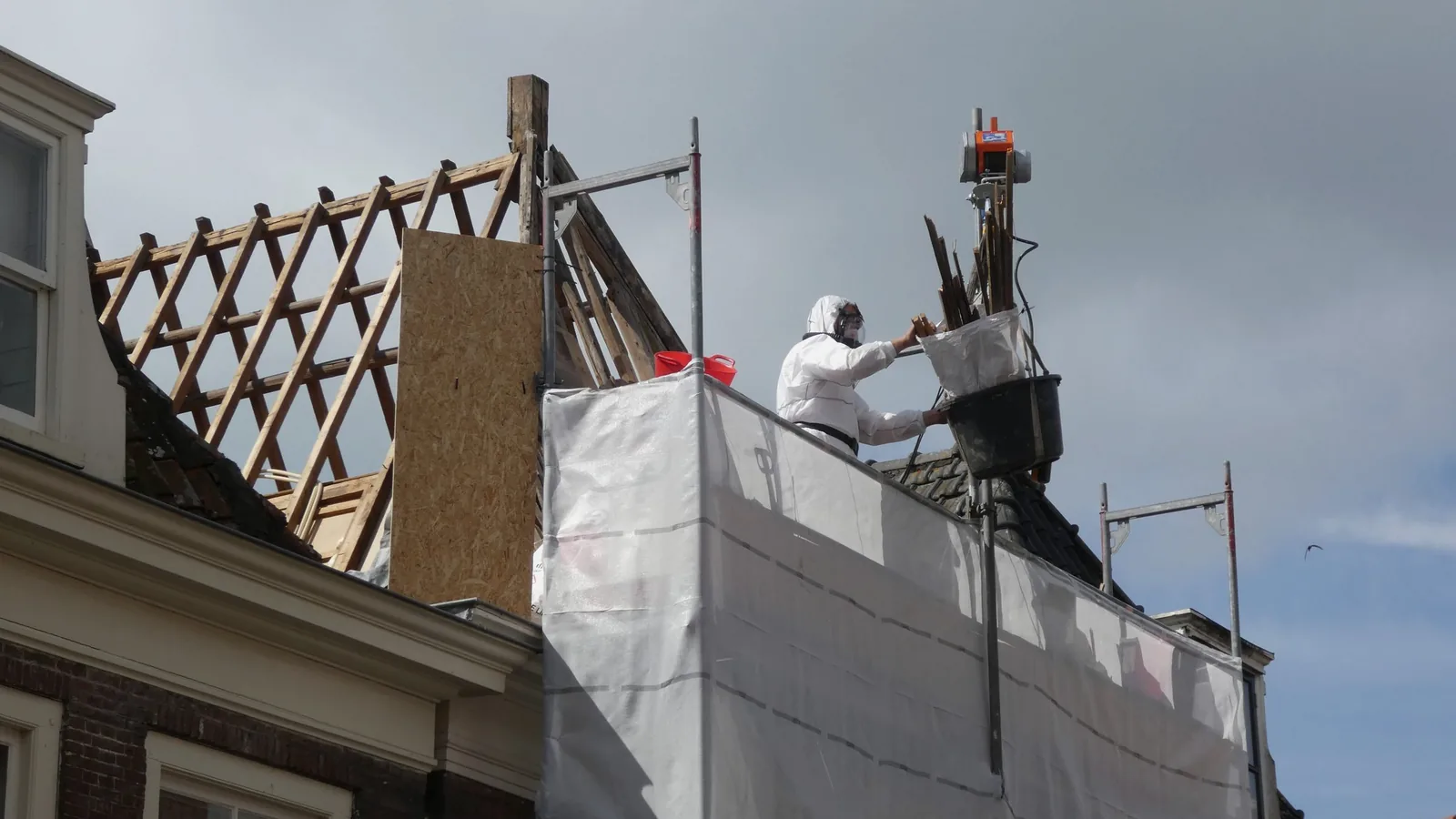
- Set up. The work area is sealed off with plastic sheeting and signs, and the neighbours are told what is happening.
- Remove. Workers in disposable coveralls and respirators take the material off whole where they can, keeping it wet to limit dust.
- Wrap and load. The asbestos is wrapped in heavy plastic and loaded for transport.
- Clear. The area is cleaned and inspected, and a clearance certificate is issued.
Before a demolition
On a knockdown rebuild, the asbestos comes off before the house comes down. You cannot put an excavator through fibro walls and sort it out later. That spreads broken sheet through the rubble, and then the whole pile is contaminated.
So the order is simple. Asbestos out, clearance certificate issued, then demolition. Your builder and certifier will usually want to see that certificate too.
Before a renovation
Pulling out a kitchen, bathroom or laundry in an older home? Test first. The walls behind the tiles and the floor under the vinyl are the usual problem spots. Small amounts still need careful handling, and once it goes past 10 square metres of bonded sheet it is a job for a licensed removalist. We can have the asbestos removed and then do the strip-out in the same job.
Sheds, garages and outbuildings
Old fibro garages, backyard sheds and carports are common, and so are corrugated asbestos roofs on rural sheds around Camden, the Hawkesbury and the edges of Penrith. These are often the first thing to go when an owner clears a block for a granny flat or a new home. They are handled the same way as the house.
Waste and paperwork
Asbestos is not tip rubbish. It can only be dropped at a site that is legally allowed to take it. Every load gets logged in WasteLocate, the EPA's tracking system, from your driveway to the gate.
At the end of the job you have the clearance certificate and the disposal records. Keep them. Your builder, your certifier or a future buyer may ask for them.
What not to do
Do not drill, cut, sand, water blast or break fibro sheet you think might be asbestos. Do not dump it, and do not put it in a skip with general rubbish. If a sheet has already cracked, or a storm has damaged a fibro shed, keep people away from it and get it checked.
Worried about a wall, a ceiling or an old shed? Snap a few photos, put them in the quote form with the address, and we will tell you straight what is involved.
Why choose us for asbestos removal
- Removal done by crews holding a SafeWork NSW licence
- The regulator told before any licensed job begins
- Sealed work areas and wet removal to limit dust
- Waste taken to a lawful facility and tracked through WasteLocate
- Clearance certificate before demolition or renovation continues
- Houses, eaves, wet areas, garages and sheds
Asbestos Removal: common questions
Is there asbestos in my house?
If it went up before 1990, assume it might. Check the fibro walls, the eaves, behind the bathroom tiles, under old lino, the roof and the flue. Only a test will tell you for sure, so get a hazardous materials survey before you knock down or renovate.
Can I remove asbestos myself?
Over 10 square metres of bonded sheeting is licensed work under NSW law, and the crumbly friable kind is Class A work no matter how little there is. Even a small patch needs the right gear, plenty of water and legal disposal. Before a knockdown or a reno, get it done properly and get the clearance paperwork.
What is a clearance certificate?
It is the sign off after the asbestos is gone. A licensed asbestos assessor inspects friable jobs, and an independent, competent person inspects bonded sheeting jobs. Once it is signed, the next trade can get on with it.
Where does the asbestos go?
Straight to a site that is legally allowed to take it. It is wrapped, loaded and trucked there, and the EPA logs the load in WasteLocate. It never goes in a household bin, a skip or the recycling pile.
Ready to clear the block?
Put the address and some pictures into the quote form. We will look over the house, the access and any asbestos, and come back with a straight answer and a price.